

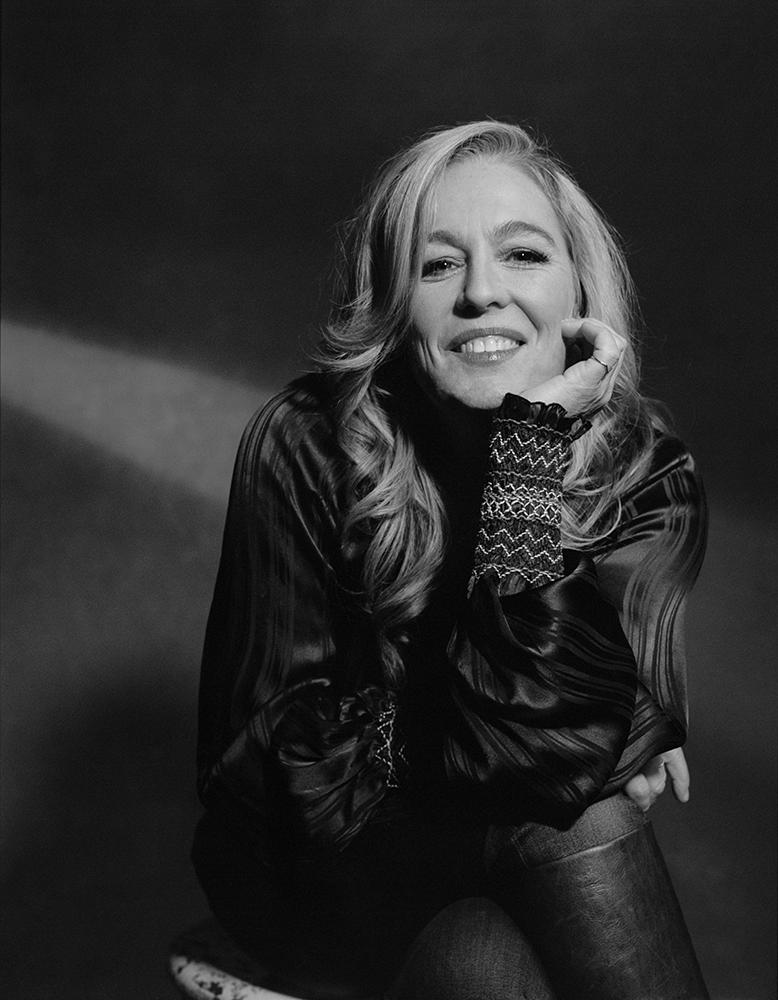
Tift Meritt is an academic, artist advocate, and Grammy-nominated songwriter. Her work reflects her Southern roots, and the emotional connection she made with music through listening to her Dad’s record collection. Her latest album, Sugar—her first in nearly a decade—finds her returning with a luminous, deeply personal collection recorded live in Nashville, capturing an intimate, unguarded energy and exploring love, resilience, and the quiet sweetness of everyday life. As well as her academic and musical activities, Tift is completing the finishing touches to the revisioning of The Gables, a 18-room hotel, bar and gathering space in Raleigh, NC.

AR’s Andy Hughes enjoyed a chat with Tift in her kitchen at home, beginning the conversation with the use of her middle name.
Do you prefer Tift or do you prefer Katherine?
No-one in my life has ever called me Katherine, Southerners go by middle names, and definitely don’t call me Kathy!
You studied Creative Writing at the University Of North Carolina, do you think that shaped your writing as a songwriter?
Absolutely. It shaped my values as a writer, it helps me to have some foundations. I had a mentor in the programme, her name is Doris Betts and she was amazing, and by osmosis, or proxy, or just admiration, she gave me the basis to be a songwriter. She taught me that you have to be your own best editor, you have to answer your own questions. She was a wife and mother, and she raised horses, and she taught me that being an artist is not an excuse to let the other areas of your life be messy. Those are really important ingredients in being a musician and a songwriter.
Does creative writing lend itself to songwriting?
It does, but they are different forms. I think the state of writing, whether it’s music or words, is a similar state of openness. I was writing something this morning, and in its early stages, I was not sure if it was going to work out to be an essay, or a song. Songwriting is really direct as a medium for writing, and it is where I feel most at home right now. Different forms of writing, including songwriting, are very specific, but what is in common, is that you start from a point, you make a mark, and then you work to expand it from there.
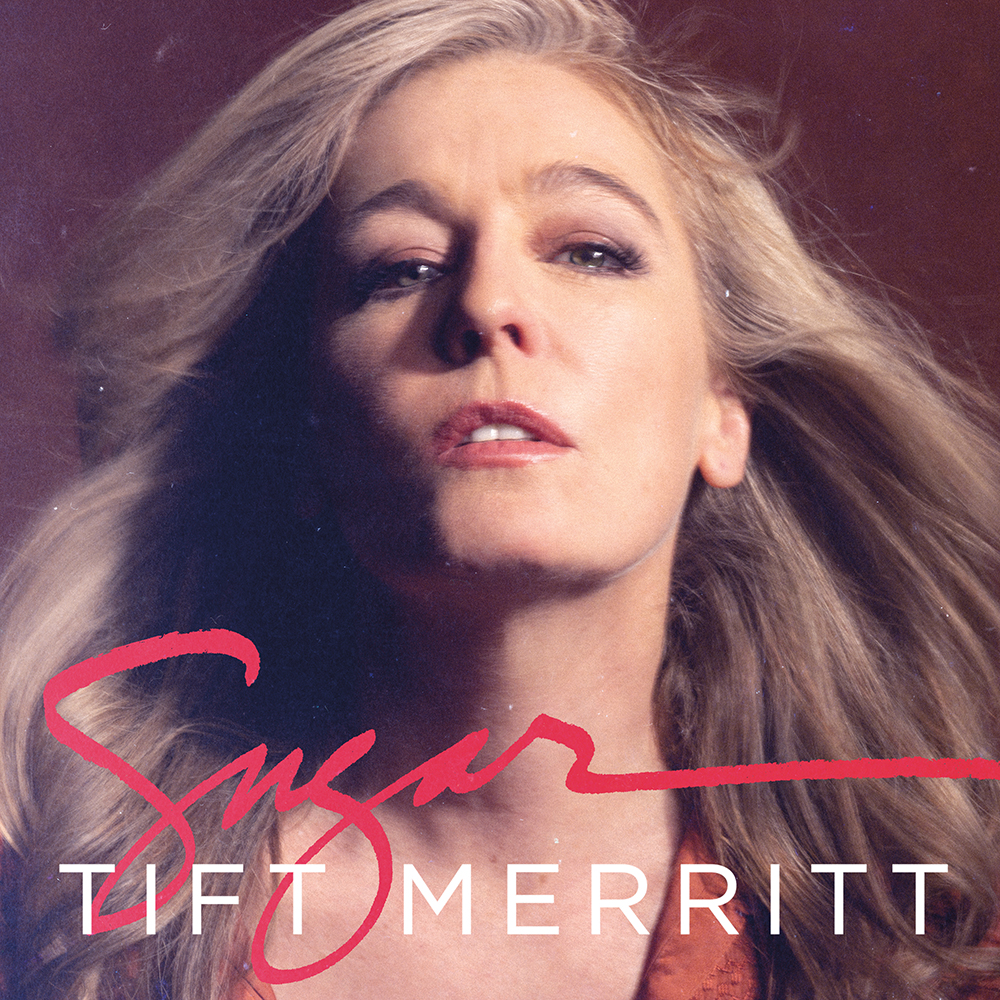
You seem to have had a golden touch with your record releases, your debut album made the Top Ten lists in both Time Magazine, and The New Yorker. That sets the bar pretty high, did you feel any sense of pressure to live up that, with your subsequent releases?
Thinking back to that time, I know I have always been an artist who wants to have a long career, with a lot to say, who keeps pushing on. I think that the pressures I have felt in my career have been from the commercial side of music, the business side of things, as against the artistic side. The business side doesn’t really care if I get good reviews or not, they just want me to sell a lot of records!
The problem is, that if you have success with a particular sound or approach, the business side of things wants you to repeat it, because that will, in theory, duplicate the success, but you as an artist instinctively want to do something different. How do you resolve that issue?
I think that there is that pressure, but I remember thinking that I simply wanted to go deeper, rather than necessarily try something completely new. There is the notion that your superficially re-invent yourself when you make a new record, and you do that each time, but to be honest, that’s not the way I see myself, or think about how I present myself to the world. So it was an interesting time, but to be honest, in those early days, it’s much better to have that pressure coming from somewhere, than not to have the pressure at all, because no-one cares what you do next!
You have worked with a number of different musicians over the years, how do you find your collaborators?
The best collaborators are people whose work you admire, and who, when you work with them, you find you connect with on a personal level. You laugh at the same things, you see the world essentially the same way. So I have really treasured the friendships with the people I have worked with over time. In the format that I work in, acoustic music, you need to be comfortable with the people you are working with, because you can’t hide behind a load of whistles and bells, it has to be real and honest, because the audience will see through if it’s not. I’m thinking about people I have worked with, as we are talking about this, like Marc Ribot, who is one of my heroes, and Andrew Bird, and Eric Heywood, who I have played music with for a long time. And all the people I have worked with in the studio. I really appreciate people who are able to move in and out of the intensity of recording, without effort. People who can walk in, pick up their instrument, and be in the zone instantly, without any fanfare. And then they put it down, and you go into the studio lounge, and it’s extraordinary what they have just done, and then they ask what’s for lunch? I love that!
I understand your interest in music started with your dad’s particularly eclectic record collection. Can you think of anything that stood out for you when you were listening to his albums growing up?
My dad has a really good ear for songs that mean something, that have something to say, and I remember the songs he used to play on a Saturday afternoon when we used to hang out and play records. Songs like Percy Sledge singing The Dark End Of The Street, and singing along to Dolly Parton in the car. I remember that, a very concrete feeling of sharing love with my dad, doing that. Then I really started to focus on women, finding Joni Mitchell, Michelle Shocked’s amazing Short Sharped Shocked album, finding songs that I could sing along with, and find myself inside them. Now my daughter does the same with me, she brings me songs that I otherwise may not have heard, it’s great.
Are your influences, either musical or lyrical, that come from the same artists, or are they from different places?
I think there are some favourites that you always go back to. If I feel I’m on wobbly ground, I go back to Linda Ronstadt. But in terms of lyrics and music, I weave back and forth between influences. If I am writing songs, I read a lot, because I think all songwriters have to read a lot. It’s funny, you think that when you get a little older, that things will get simpler, and they don’t! I think I am still a student of music, still trying to find the time to learn new things.
What’s your current guitar of choice?
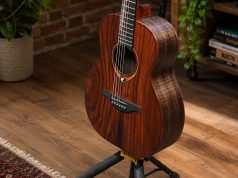
I have three guitars that are my go-to’s. I have my Gibson B-25 that I bought from Chris Stamey from the dB’s, he said this guitar needs to be on television! It’s red and it has holes in it, and I play it like a drum, and it feels like an extension to my body. I have 1964 Gibson Hummingbird that I keep in open tuning, and I have a three-quarter size Gibson B-25 Student Model that I keep high-strung, and that is my go-to writing guitar. You can get really weird juxtapositions of chords using it. That’s my jewel that I keep at home, I can’t really carry too many guitars on tour, so I leave that one.
Do you have any effects or tunings that you use?
I’m not especially an effects girl, but I do have a loop pedal that I use for some of my vocals. As for tunings, I am fond of open tunings. I currently have a slight variation on an Open D, that I like for the Hummingbird. I can only take two guitars out with me, so I am trying really hard not to experiment too much with different tunings, because of the practicality of working on stage with them. I like a nice warm dark sound, and when I get that, I can really enjoy singing over it. I’m not a virtuoso guitar player, by any means, but that’s not what I’m looking for. If I have the sound I like, the feel I like, then I can sing and do what I do, and that’s fine for me.
Do you practice a lot?
Not right now, because there is so much going on. My daughter is turning ten years old, so I spend a lot of time with her. I am an academic, and I am opening a hotel, so when that’s up and running, I hope I will have more time to practice. Right now I’m just grateful of there is food in the refrigerator! I think it’s good to have different things going on in your life, it makes you a more rounded writer. I believe that if you get too wrapped up on the spotlight side of things, you end up with a lot less to say. I really hope that in the next year or so, I will have time and space to get back to my routines as a musician, and that does include getting to practice.
Are you keen to direct the musicians you work with, or do you like them to bring what they bring to the studio or the stage?
Do you mean, am I bossy? I’m kidding! I think one of the great things I have learned is that it’s wonderful to have people around that you don’t have to spend too much time talking with about what we are all doing. I have opinions, of course. I love to work with people who are really good at what they do, and if there is a correcting about anything, it’s just a few words. And for me, that is what success means, to be in the studio or on stage with those people, really making things happen. Earlier in my career there was more talking, because I needed to explain how I wanted things, but now, I don’t need to do that, which is just ideal.
What’s your favourite song that you have written so far?
You are talking to someone who has just finished an album and put it out, so I don’t have any perspective on those songs at all, I have no idea how they are going to age, as time goes on. I think every song has an emotional investment in it, and with the passing of time, I settle on the ones I like best. From my early albums there are probably two or three songs from each record that I still feel comfortable with, and still like to play. So we have to wait and see what comes down from the latest songs. I will say that I love Travelling Alone because it’s a kind of manifesto, a world view, and it’s about values. I’m glad that I can still lock into the feel of that song. Maybe the songs on Sugar will feel that way, bit that’s in the future. I’m like a lot of musicians, my absolute favourite song is the one I’m going to write next.
ANDY HUGHES.