
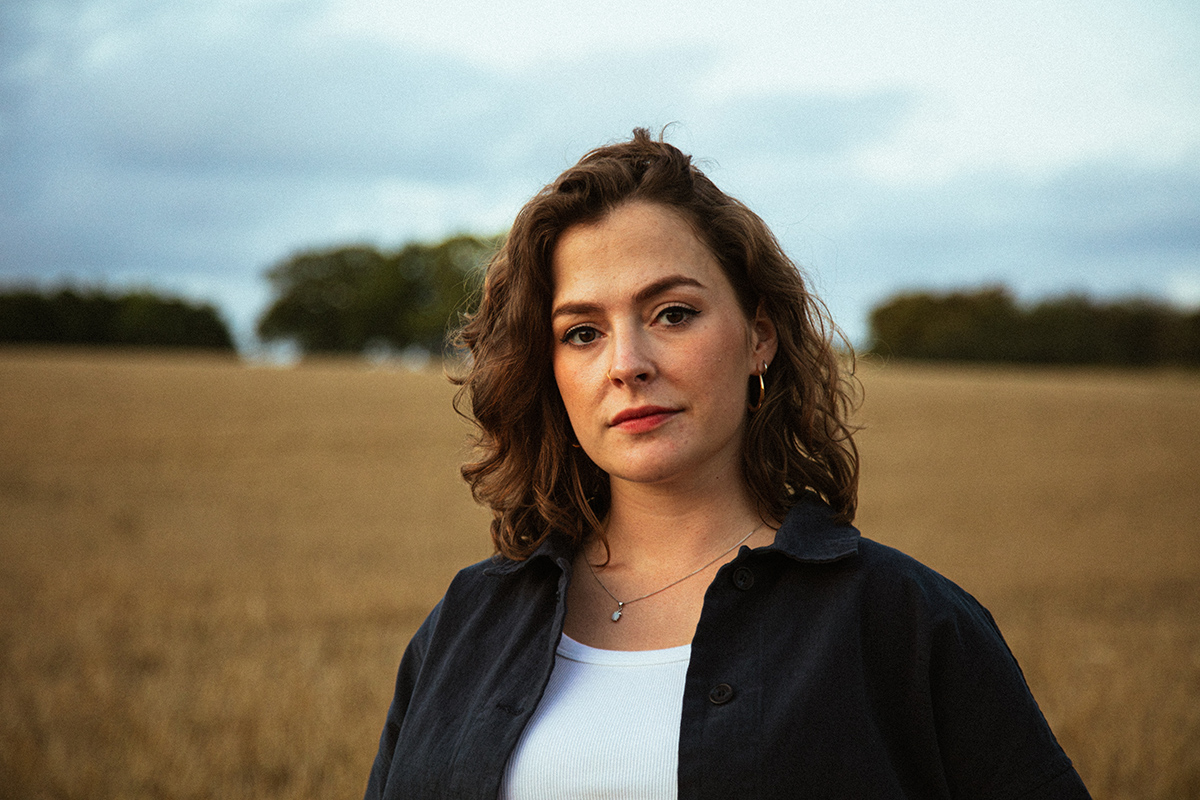
The Guardian newspaper has referred to you as a ‘folk prodigy’, what do you think they meant by that?
I’m not really sure. I’ve never been sure what the term ‘prodigy’ means if it refers to me personally. I hope it means someone that is a new-ish and exciting musician on the scene. I would hope that is what they mean.
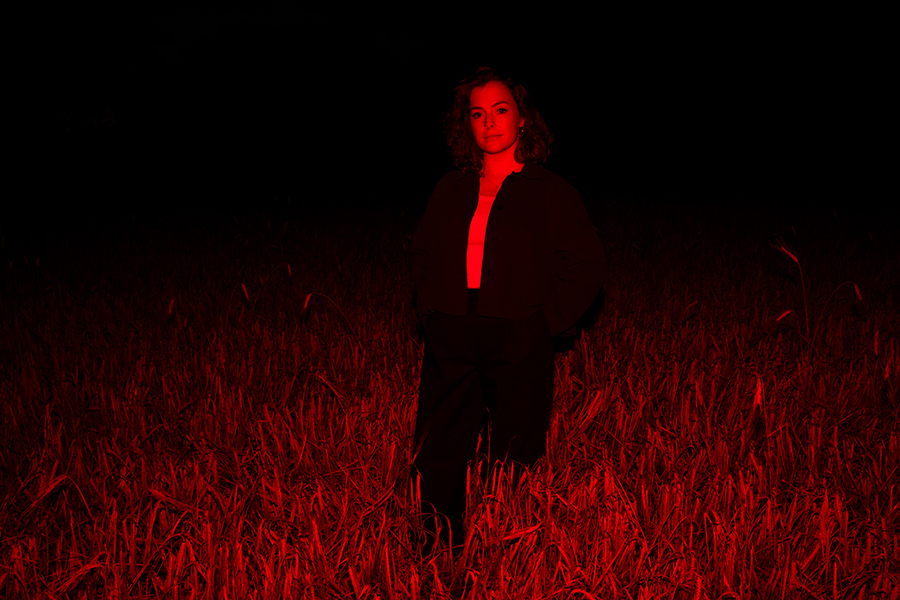
People who are coming to you through your new album, will find songs that are quite intense, and quite dark in places. Is that where you feel you are as a writer, at the moment?
Not especially. I think Matches is a pretty dark song, because it’s inspired by the Salem Witch Trials which is about as dark a subject as you can find for a song. Other songs are not so much dark, maybe more introspective, and nostalgic.
It sounds as though you are looking at yourself, maybe assessing yourself through your work, would that be a fair assessment?
Yeah, I think so. I wrote most of the songs in the last year or so, during the transition from my twenties to my thirties. It’s really the first milestone you reach, and it does conjure up feelings about wondering if you are where you feel you want to be, or you should be, at this point in your life. My path has diverged quite a bit from some of my friends, they have gone down the whole marriage/kids path, and here I am, writing an album. I am very proud of it, and I wouldn’t change anything about it at all. But at the same time, I wonder like anybody, if I am where I should be right now. I think that theme does crop up in the songs on the album, and they are quite personal, and looking at my place in the world.
I think that milestone is significant in a person’s life, but I think it matters less and less as the next milestones come and go. But for this one, maybe it did affect the way you wrote the songs for the album?
I think that A Matter Of Time on the album deals with that quite directly. Thinking about whether I am doing the right thing at the right time. But the song Frightening Machines is about my relationship with my body, and Madleine is about my relationship with the music industry, which is not a negative thing. I don’t think the entire album is about just one thing, but there are hints and aspects about me trying to work out where I fit in with everything.
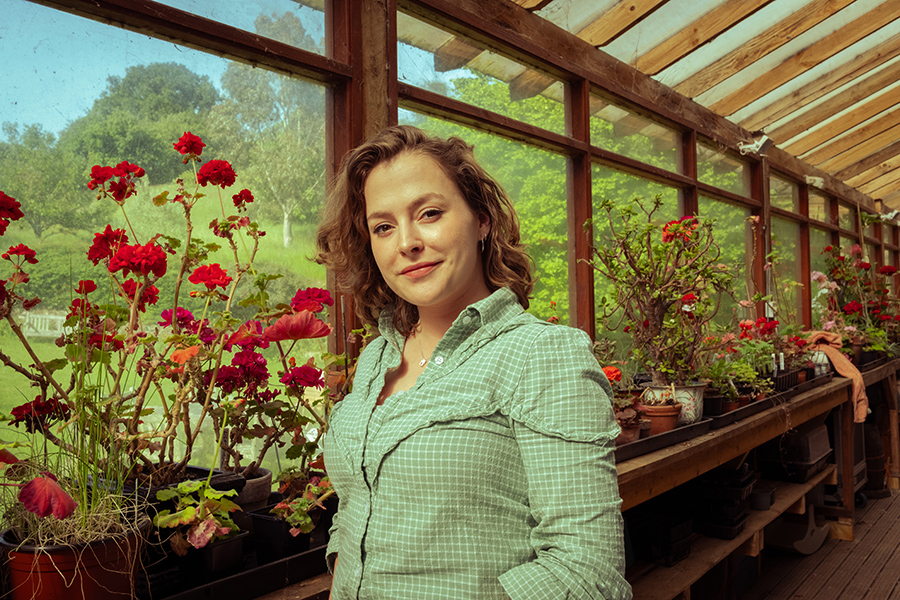
It’s a beautifully produced album, the instrumentation on the songs is wonderful. So, when you take the songs out on the road, will you have a band with you, to be able to replicate those songs on stage? Or is it going to be a stripped-down version of the sound of the record?
I have just completed a series of Record Store shows, and they were just me, solo and acoustic, which was really nice. When I do my tour, I will be in a trio, with me on acoustic and vocals. With me will be George Boomsma who does some really atmospheric electric guitar, and backing vocals, and Andrew Stuart-Buttle on synths, and strings, and they will be adding the textures from the album.
What were your musical influences growing up?
I was lucky to grow up in a house where music was constantly o the stereo, and a good variety of genres as well. I loved Nick Drake, Five Leaves Left is an album I couldn’t stop listening to at home. I also loved the acoustic guitarists my parents like, Christy Moore, Bert Jansch, people like that. My dad was also into a lot of Progressive stuff, he always listened to Frank Zappa, and I grew up hearing a lot of his songs. I love some metal bands as well, like Tool. Basically, any music that tells a story, and is lyric led. A lot of the Prog stuff is lyric led, and that always appeals. Another artist is Jake Thackray, because his use of language is wonderful.
What was your first guitar?
The first guitar I played was a battered old Yamaha Dreadnaught that my father found when he was s student, and that was the guitar I learned to play on. Then when I was quite young, I started doing open mic shows, and I was quite a small kid, and the guitar was absolutely massive for me. And when my parents realised that I was taking the guitar seriously, and I was really enjoying playing it, and starting to try and write my own songs, they bought me a Martin Dreadnaught, which is my constant companion. That was the first guitar that I owned, and it’s still the guitar I leave out around the house to catch songwriting ideas on.
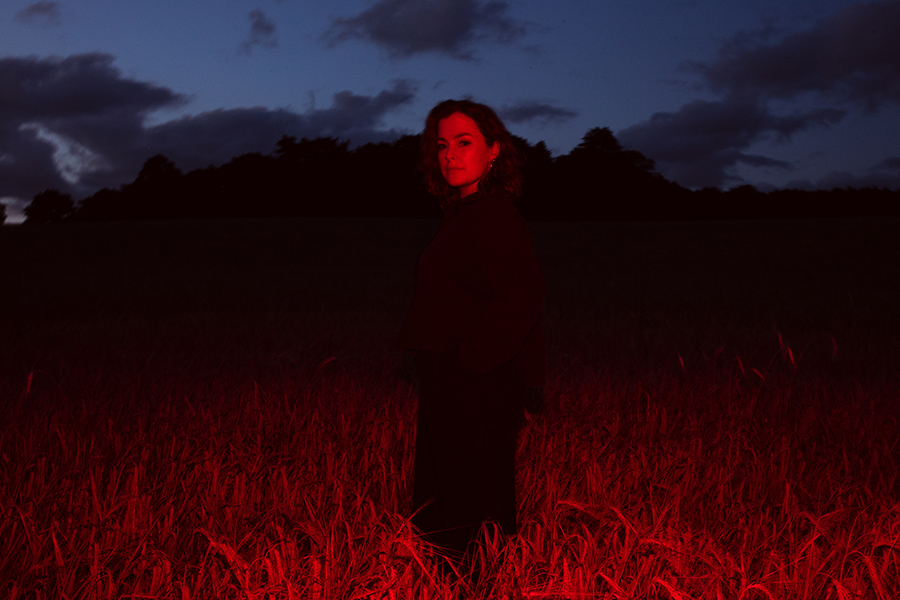
Did you not fancy something a little more manageable, that would maybe suit your build and your smaller hands?
Well, it was a gift, so I didn’t know I was going to get it, and I had always played a Dreadnought anyway, so I hadn’t really thought about getting a different sized guitar. More recently, I have been playing a McClaren guitar, made by Sam McClaren, a luthier from Yorkshire, one of his Performance series of guitars. And I have to say that is a better fit for me for live performances.
When Sam built the guitar, did he personalise it in any way?
Well, the design is one of his Performance models, so the spec wasn’t specifically for me, but he did ask if I wanted it personalised in any way, but I said no, just build it as you would for anyone else. But what he did, which I thought was really sweet, he put a little moon and stars just inside the body, so I can see it when I’m playing, but no-one else can. That’s a lovely personal touch that I have.
How did you hook up with Sam McClaren?
I did a workshop with him, he has a studio in Yorkshire where he builds his guitars, and George Boomsma, who I mentioned, the guitarist who works with me, he knew Sam already. So, I popped in and did a session with one of his guitars, and just loved it, they play so beautifully, And Sam is such a nice guy, he’s my age, and he’s doing really well. We stayed in touch, and he contacted me during Lockdown, because none of the normal outlets he used to advertise his guitars, the conventions and so on, were working, so he told me that he had the money he would normally use to get pitches at the outlets he used, so why didn’t he use that to build me a guitar, and I could play it at gigs, and maybe spread the word about his guitars. And I have indeed been using it since I got it, and it is my prized possession. He specialises in classical guitars, and builds in all shapes and sizes, he is wonderful.
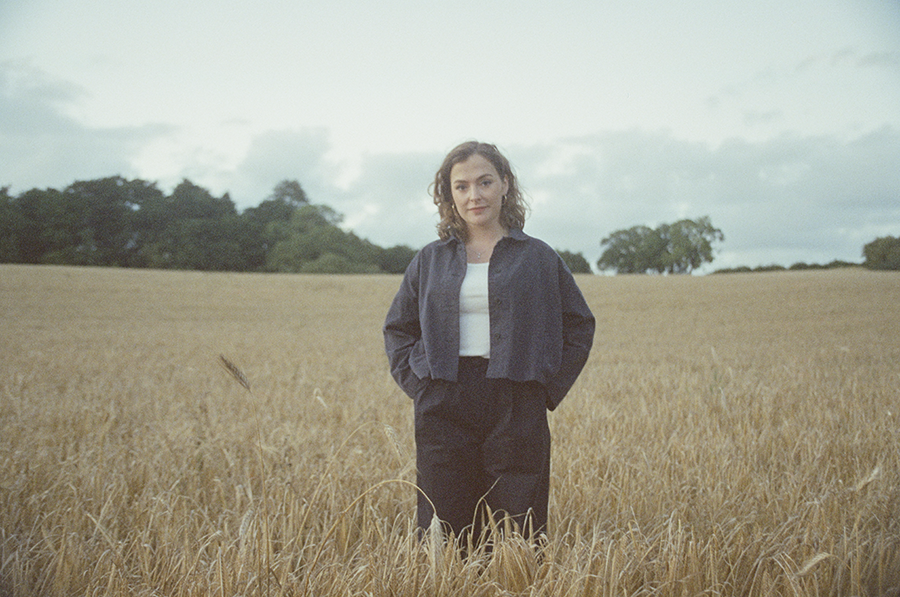
Do you have any particular preferences in a guitar?
Yes, I do like a slim neck on a guitar because as I said, I’m not very big, so it makes playing easier. And the McClaren guitar that I play has a lovely small headstock on it that I really like, I go for small and slender aspects for guitars. I’ve never had a Parlour guitar, but I do quite fancy the idea of one. I do quite a lot of solo gigs, and I travel by train a fair bit, so having a small and light guitar would make life a little easier for those times.
The process of songwriting is fascinating, some artists work on music first, some do lyrics first and find a melody to fit, how do you compose?
It’s a little of both for me. I am always making notes of lyric ideas. Things come from all kinds of sources, something I read, something someone says in conversation, or something I overhear. I do a lot of walking, and quite often, I get ideas for songs when I am out having a walk. So, I have notes on my phone, and in various notebooks where I store them. Then I spend time with my guitar and noodle a little until I get a melody or a riff in my mind. Then it’s a kind of matchmaking process. I will have a melody, and then I go back to the lyric ideas and see what pops out as looking like it will be a fit, and trying to put the two together from there. More recently, I have been working to a brief, and that means that ideas come together more with a tune and lyrics together.
When you say working to a brief, what does that mean?
I have been doing some collaborations where I get asked to write a song on a particular theme, which means I have lyrics already to work with. Then I can find a melody that I think works, and the lyrics can be adapted to make them fit. There are two things I need to be able to write. One is a lot of reading, I find that if I’m not reading, the song ideas don’t come, because I get a lot of ideas from books and poetry. The other thing I need is down time. I talk to musicians who write on the road, but I really can’t do that. If I am out on tour with a new album, I find my mind is really on that, and I can’t think about anything else. I have to have free time when I’m not concentrating on anything to be able to think about some new ideas. I also find I write better really late at night. There is something really good about being awake when the rest of the world is asleep, and that seems to help me with the writing process.
When you have a new song ready, who hears it first, who do you play it to?
That’s a really good question. I usually play it for my manager, who is also my best friend, and he gets to hear new songs quite often. Or, I send it to George, the guitarist I work with, I trust his musicality. It’s interesting, I’m not playing the song to get approval from anyone, it’s weird because when I write for myself, it’s a solo process, just me and my thoughts, but when I have finished a song, I always get the urge to share it, for someone else to hear it. But those are the first two people that hear my new songs. When I first started writing, I liked to play new songs a few times to an audience, before I recorded them. They kind of bed in when you try them out on stage. But now, with my third album, I am at the stage where I don’t really get to play new songs for an audience until I have recorded them, so that has changed the writing methods slightly. I have played songs to an audience that I thought were finished and ready, but then I change a chord here or there, or alter the lyrics slightly, to take account of the way it feels and sounds, so if you can work it that way, I think that does help.
When you record, do you like to play and sing together, or do the two separately, guitar and then vocal afterwards?
Usually I do them separately, because I have quite a quiet voice, and I find that if I do the two together, I get some bleed in the sound, between the vocal mic and the guitar mic. A couple of the songs on the new album we have done the two together. On Sirius, we wanted more of a band jam feel about it, but most of the time, I record the guitar first, and then I do the vocals afterwards. I like to spend time on the harmonies, I enjoy working on those.
Do you use any unusual tunings?
Not really. The only tunings I use are DADGAD and Dropped D. I would like to experiment a bit more with different tunings. One of the reasons I haven’t really do than yet is because I don’t have that many guitars, and I don’t like to be constantly re-tuning on stage. I think I may look at doing something with that, I’m writing a song in DADGAD right now, when that’s done I’ll have a think about it. One of the reasons I am interested in trying different tunings is to see if it prompts any new and different melodic ideas, and a sort of creative refresh.
How technical a guitar player are you?
Do you know, I’ m not really sure! I am entirely self-taught, so I play what works for me, and suits the songs I write, but I have no idea who technically complex my playing is, or not. I either play chords that I have found, that work for me, or chords I have found in songs I have learned. I finger-pick, ad I have been told that my finger-picking technique is quite unusual, I use the little finger on my right hand quite a lot. This is probably because I taught myself in my bedroom, and it was a while before anyone else saw me, and considered the technique I use. I have just developed my own way, and that’s the best way, I think. It’s nice to learn some different finger-picking techniques, not to be technical for the sake of it, but simply to bring some variation to the way I write and play. I do encourage people to spend your own time learning your instrument, and work out what suits you, because that’s what you are going to work with. As long as I get the sound I want, that’s fine for me.
Is there any one song on the new album that you are looking forward to playing when you take the album out on tour?
There is, and it’s Matches. As I mentioned, I have done some solo acoustic shows in record stores, and I found I really enjoyed playing Matches, I like the fingerpicking pattern on it. It’s quite an angry and fierce song, and mush as I try to put some fire into it, I am looking forward to having the guys with me when I play it, to get that sense of pace and drive that I want into it.
Are there any songs that might feel a bit more challenging to play live, maybe not a straightforward muscle memory to play it without too much effort?
I think probably Hurricane, because it has an almost bossa nova rhythm to it, which is not something I have played very much on guitar. It came about because just before we went into the studio to record the album, the producer, Rob Ellis called me and said that the songs were great, but he felt I had a ‘groovy’ song in me, and he challenged me to write something ‘groovy’ to put on the album. So, I did. I wrote Hurricane, and I really love playing it, I did it in my Record Store sets, and I’m looking forward to seeing how that works live, with the guys, getting a groove on.
Do you practice a lot?
I do, I think you need to play every day if you can. Playing is a muscle, you need to exercise it to keep it working at its best. I either run through my own songs, or I try and learn a song that I like, because that can often lead to a chord pattern, or a sequence that you haven’t thought of, that you can add in to your songwriting, People come up to me at gigs and say that are just starting to learn, and do I have any tips? I always say, get a guitar stand, leave your guitar on it, so it’s looking at you. If you hide it away in a case, you won’t pick it up and play it, if it’s there, looking at you, making you feel guilty, then you will play it.
KATHERINE PRIDDY 2026 UK TOUR DATES
16 April – Stroud, Sub Rooms
17 April – Brighton, Saint George’s Church
18 April – Southampton, Papillon
19 April – Cambridge, Junction 2
20 April – Norwich, Arts Centre
22 April – Bristol, Saint George’s
23 April – London, Union Chapel
24 April – Nottingham, Metronome
25 April – Liverpool, Tung Auditorium
26 April – Leeds, Howard Assembly Room
28 April – Oxford, Holywell Music Room
29 April – Manchester, The Stoller Hall
30 April – Edinburgh, Pleasance Theatre
1 May – Gateshead, Sage 2,
2 May – Barnsley, Birdwell Venue
3 May – Pocklington, Arts Centre
5 May – Buxton, Pavillion Arts Centre
6 May – Milton Keynes, The Stables, Wavendon
7 May – Exeter, Phoenix
8 May – Cardiff, The Gate
9 May – Birmingham, Town Hall
ANDY HUGHES